
Gifted#
Musk’s ancestors, driven by a love of adventure, emigrated from America to South Africa. His maternal grandfather even flew a plane from Africa to Australia. Musk was born in South Africa and showed astonishing memory and brilliance from an early age. His mother, Maye Musk, told his teacher: “My son is a genius.” The teacher replied, “Yes, every mother says that.” Maye: “No, I mean he really is a genius.” As a child, Musk sometimes seemed “slow to react.” His mother said when people talked to him, he’d give no response at all. She thought something was wrong with his brain and even took him to a doctor. But later she discovered Musk was simply immersed in his own world of thought. As a child, Musk could even finish reading the entire library’s collection and then ask the library to get more books…
Arriving in America#
Due to the less-than-ideal environment in South Africa, Musk, approaching university age, executed a two-step jump. He first went to university in Canada, then to the United States for his master’s. Upon finally reaching America, Musk immersed himself in Silicon Valley’s work environment. The tech industry desperately needed young people like him — brilliant and relentless. And Silicon Valley’s tech atmosphere and culture of freely exercising one’s talents let Musk dive in completely.
Zip2 and PayPal#
Soon Musk founded Zip2, essentially a corporate version of online maps. While we’re now very familiar with online maps, the US internet industry was just getting started back then — this was all novel stuff. After many twists and turns, Zip2 did grow. Personally, I think Zip2’s model would have struggled to survive long-term without pivoting toward online maps or something like Yelp. Eventually, some sucker bought Zip2 for $300 million, instantly turning Musk into a multimillionaire and Silicon Valley tech tycoon. You could actually tell — Zip2 was deeply divided internally, had directional problems, and Musk didn’t have absolute decision-making power. He probably wanted out long ago.
Before leaving Zip2, Musk was already planning and recruiting for online payments. At that time, the world didn’t even have anything like Alipay… Musk believed traditional finance was too conservative and that there was enormous opportunity to change the industry model. But many bankers didn’t believe internet finance could work, because internet finance couldn’t handle network security issues — after all, the slightest error in finance could have enormous consequences. Initially, the company Musk founded wasn’t PayPal but X.com, which later merged with PayPal and kept the latter’s name. Early on, X.com suffered massive attacks but survived. Their security mechanisms at the time had a significant influence on the later online payments industry. PayPal was later acquired by eBay, netting Musk hundreds of millions of dollars — another huge payday.
SpaceX and Tesla#
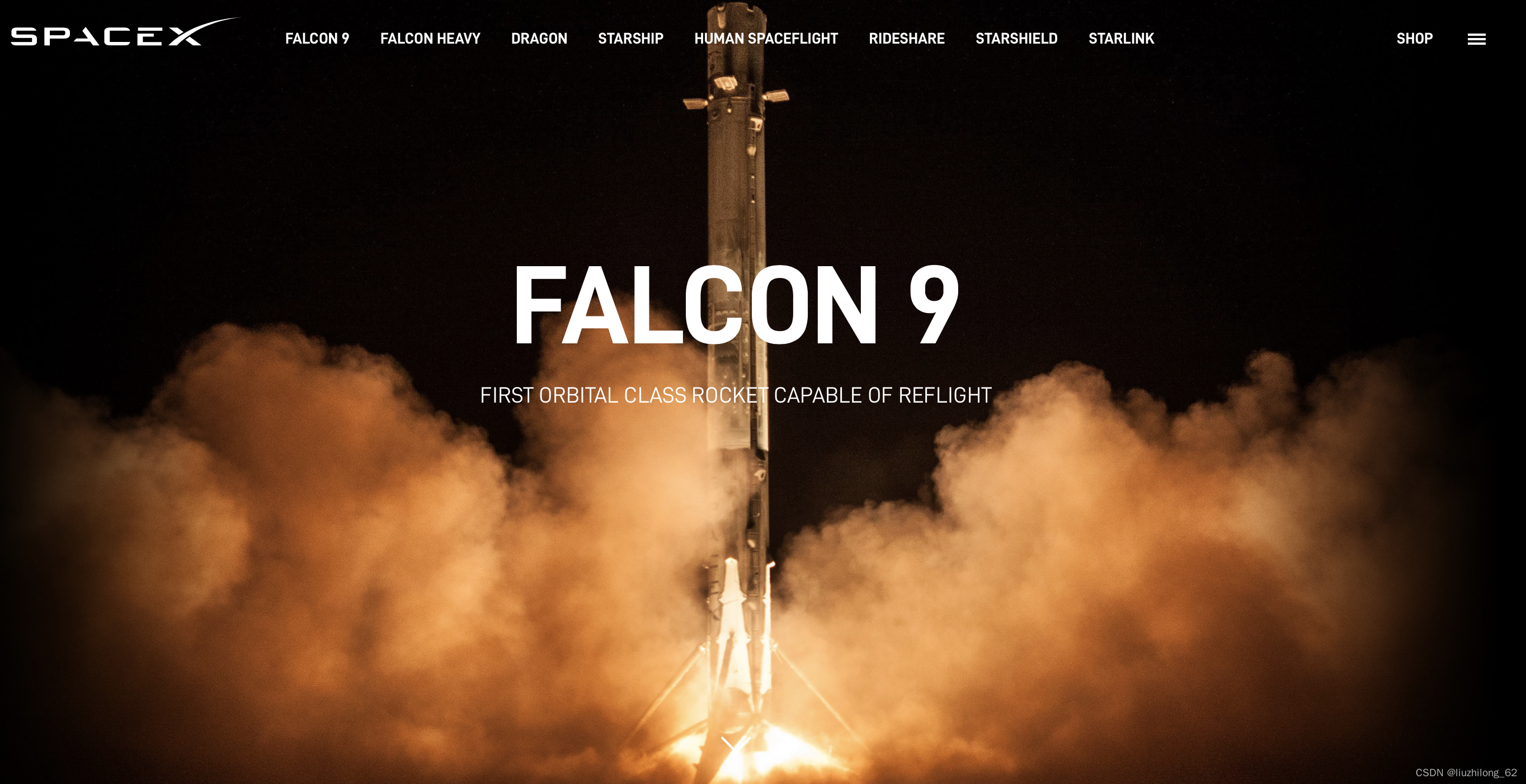
Zip2 and PayPal were, for Musk, validation of his industry sensitivity and business acumen — though some questioned his execution and decision-making abilities, i.e., his CEO chops. As always, Musk viewed these industries as too conservative and old-fashioned. Musk loved recruiting extremely capable top university graduates and disliked hiring seasoned, conservative-minded industry veterans. He ran both companies simultaneously, and for a long time, neither company produced any product at all. And, as you’d imagine, rocket-building burns through money like nothing else. After several failed rocket launches, Musk deployed his signature skill: fire… And just as the financial crisis hit and no one wanted to invest, he poured his entire personal fortune into both companies. After several failures, SpaceX’s Falcon rocket finally achieved the feat of being the first private company to successfully launch a satellite, landing a $1 billion NASA contract. Tesla, after shamelessly asking early Roadster customers for more money (because developing such a radically new-concept EV cost far more than projected), finally produced a finished vehicle and built out a highway EV charging network and an electric car factory. After simultaneously succeeding with two industry-disrupting companies, no one questioned Musk’s ability anymore.
For Humanity#
Musk’s success is inseparable from his excellent qualities: sensitivity to future technology, rapid comprehension of new industries, talent identification, a free and open tech and market environment, long working hours and execution… But the things people dislike include his ruthlessness toward employees — some loyal, devoted people, fired just like that. As a worker myself, I deeply understand the feeling of giving your all without recognition from the company. Reading this book, I could even feel how American capitalists truly exploit workers. Once, an employee missed a company gathering because he didn’t want to miss his daughter’s birth. Musk emailed him an angry tirade: do you want to wallow in domestic trivialities or work relentlessly to change the world? The guy just didn’t want to miss his daughter’s birth.
A few years ago, reading Steve Jobs, I thought: how could someone be so obsessive? But that exact kind of person changed the mobile industry and brought about the smartphone revolution. Jobs was way too formidable. After reading Elon Musk, I now feel Musk is even stronger than Jobs. Tesla, SpaceX, SolarCity — they’re all oriented toward humanity’s future. The future world seems to have started its engines; you can see it slowly arriving.
Musk’s Mars plan finally seems to have glimpsed some dawn. For decades, the American space industry had nearly stagnated. He brought a new model and once again made aerospace a hot field. But there are also uncertainties. If a crewed launch explodes and causes casualties, SpaceX could plunge back into the abyss. And if Tesla discovers a serious defect requiring a mass recall, the stock price would crash.
If you could be the first human to set foot on Mars, would you do it? Musk has thought about it, and he truly could become that person. But Musk wouldn’t do it. The book’s original words: I want to go, but I don’t have to. The point is to enable many people to go to Mars. It would be like the head of Boeing being a test pilot — for space exploration, that’s unwise. Even never going to space is fine. The point is to extend the lifespan of humanity as much as possible.
Working for humanity — this theme truly stirs the heart. I’ve played Civilization VI for days and nights on end, from stick-wielding primitives to igniting rockets, all for that moment of launch, when humanity becomes an interplanetary species and builds a new home on Mars!