
Vacation#
I took a long vacation and went back to my hometown before my leave days expired — not just to escape the busyness of work, but also to visit my grandparents. For working people like us, going back to our hometown is really difficult. If it’s just a weekend trip, we’d only get one day of rest before having to head back — too exhausting. We don’t get many vacation days to begin with, and when we do, most people think about driving out to see some scenery or just staying home for a few days doing nothing. No one usually thinks of using their precious leave to visit elderly relatives back home.
Ironically, the leave I used to visit my grandparents was childcare leave, not some kind of “eldercare leave.” It seems the world doesn’t have such a thing as “eldercare leave” — only family visit leave. Although there is legally a “family visit leave” provision, never mind that it isn’t specifically designed for visiting the elderly — just look at those impossibly long qualifiers. For the vast majority of people, family visit leave essentially doesn’t exist.
Using childcare leave not to care for children but to visit the elderly — I imagine most people wouldn’t do that. Am I the only oddball who would? Well, at least this is how I see it: raising children and caring for the elderly are equally important; we shouldn’t favor one over the other. Society and working people tend to prioritize the former. Regardless, I still wanted to go back and spend time with them, to see what the old couple does every day, how they live, whether they face any difficulties, and how they cope with those difficulties. So I went back, alone.
The end of the road. The place where the old couple lives is where I grew up. It’s quite hidden — you have to turn off the main road onto a mountain path and go a long way, all the way to the end. It feels like a place cut off from the world. When you arrive there, it’s as if all connection to the outside world ceases to exist.
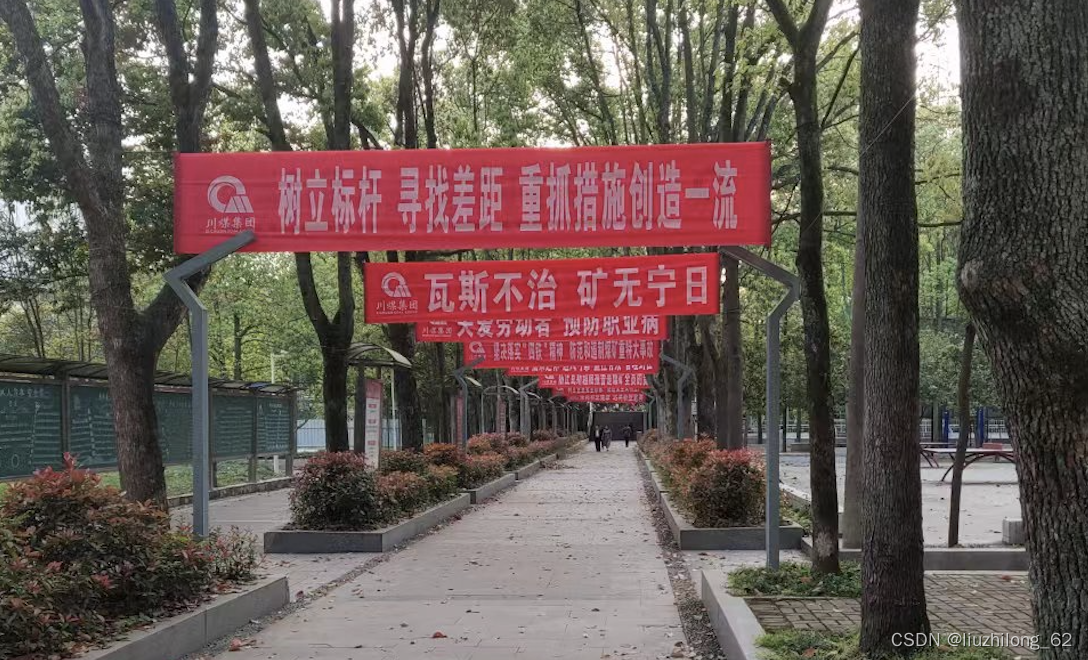
It’s not actually my ancestral hometown, but I prefer to call it that. It’s a mining area. Because it’s built into the mountainside, the mine has a striking three-dimensional quality — so much so that I’m in awe of the predecessors who designed it. I still don’t quite know how to describe the administrative level of this place. It’s not a village, not a town — more modern than a village but smaller than a town. When I was little I thought this place was huge; now I realize you can walk through the entire mining area in just ten minutes.
The whole place relies on coal mining as its economic pillar. It once prospered, but now it has declined significantly. There are still miners who go underground, but in the living quarters, you no longer see young people like me. The mine has an elementary school; when I attended, there were about 70 students per grade. Now there are only seven.
The childhood memories there are overwhelmingly strong — like a paradise, a sanctuary untouched by worldly strife, another world. Being far from modern society, you only need the basics to get by, and time seems to pass slowly. A place like this is indeed very suitable for retirement — and indeed, there are many elderly people here.
Food#
When I was little, the market was fairly lively. I remember the poultry vendor would submerge whole chickens in something black and tar-like before plucking them — the poultry area was always filthy. Now the market no longer sells fresh meat; you can only buy vegetables grown by nearby farmers. If you want fresh meat, you have to go to the village market day or take a bus into the city.
Because the old couple is extremely frugal, I was initially worried they lived too simply — maybe just rice and vegetables every day. When I went back this time, I didn’t tell them exactly when I’d arrive. When I got home, I found they had even bought braised duck — I was quite relieved. My return made them very happy, and with just the three of us, they made five or six dishes every day. I even started to wonder if I was there to keep them company or to cause them trouble.
Maybe I’ve been spoiled by the rich flavors of the outside world. At first, when they asked, “Is this dish good?” I couldn’t bring myself to say what I really thought. At moments like this, I recall a line from some book: “Humans cannot directly judge the value of something; only by comparing it to something else do they know its worth.” The same goes for food. When you taste something for the first time, you don’t actually know if it’s good or not. If you do know, it must be because you’ve already compared it to something in your memory. When I was little and first tried hotpot, adults would always ask, “Is this hotpot good?” To be honest, I had no idea — I didn’t even know what “good” was supposed to taste like. I just ate.
Now my palate has indeed grown more demanding, but here, I wanted to reset everything, to press that “restore factory settings” button. I can say with complete sincerity: what they cook is delicious.
One more thing: at one point I offered to wash the dishes. They said, “Put them down, you don’t know how — we wash dishes with rice water. You wouldn’t get them clean. Dish soap is full of chemicals; we don’t use that stuff.”
Traditional Chinese Medicine#
On this trip, I discovered a fact: elderly people are extremely dependent on medication. Their medicine cabinets are always stuffed with all kinds of drugs — Western medicine, Chinese medicine, cold medicine, anti-inflammatory drugs, ointments, supplements — a whole pile. Whenever they feel something wrong with their body, they reach for whatever they think will help. During my visit, my rhinitis flared up (an old problem of mine) — nonstop sneezing and runny nose. They kept urging me to take cold medicine, recommending Ganmaoling or cephalosporin. I must have said at least ten times: “It’s rhinitis, not a cold.” They, of course, had no idea how to treat this kind of rhinitis, so they just kept urging me to take cold medicine.
One day I took them into the city. Besides a supermarket run, the more important errand was buying medicine. Buying medicine meant both Chinese and Western.
The Chinese medicine was purchased at a Yunnan herbal shop. The shop owner had a buzz cut, a black T-shirt, a silver necklace, and a brown beaded bracelet — he looked quite burly. With his tough-guy appearance, I didn’t even dare to speak loudly to him, though my grandfather didn’t seem to notice any of that. The shop was mostly filled with herbs I couldn’t name, sold by weight, quite expensive — not your typical Chinese medicine. Clearly, my grandfather was a regular customer; the owner knew him. But it seemed my grandfather didn’t really know how to pick herbs either: “Boss, just weigh me 300 yuan’s worth based on my health condition.” So the owner grabbed a bit from here, a bit from there, and finally ground everything into powder.
Maybe I’ve studied too much — I’ve always been skeptical of traditional Chinese medicine, simply because I find it lacks convincing rationale. I was quite worried they’d get scammed; these herbal medicine dealers prey specifically on the elderly. But my grandfather said: “Before, your grandmother had constant headaches. After taking this medicine, the headaches stopped.” So it seemed to work. Western medicine is indeed far too unfriendly to the elderly.
Western Medicine#
After buying the Chinese medicine, we walked a long way to a pharmacy to buy Western medicine. That pharmacy might be one of the few they know.
The vast majority of drugs in that pharmacy couldn’t be reimbursed. Only in a tiny, shabby room deep inside were a small selection of reimbursable drugs. I looked around and barely recognized any of them — all named with chemical formulas, completely incomprehensible. Only things like Ganmaoling and loquat syrup were familiar. My grandfather fell into the same difficulty choosing. He recognized cephalosporin, but the pharmacy girl said they didn’t have it. He got a bit angry and said to her: “Don’t you have any decent medicine?” (“Decent medicine”? I tried to parse what he meant.) The girl pulled out a red box of nicely packaged health supplements from somewhere. My grandfather couldn’t read the tiny text on the box, so he asked me to read it to him and tell him what it treated. I looked at it — the thing claimed to treat everything — so I didn’t read it and handed it back to the girl. In the end, they only picked up a few common cold and cough remedies.
My grandfather repeatedly told me along the way that he gets 170 yuan of medical insurance reimbursement per year. I could tell he really, really wanted to spend that 170 yuan, to stockpile some medicine at home. That’s why he wanted to go to a Western pharmacy, and that’s why we walked all the way to this pharmacy that accepts insurance reimbursement.
But there was some trouble at checkout. The cashier girl had looked unhappy from the start. She took the medicine and rattled off a bunch of things I didn’t understand — and my grandfather clearly didn’t either. The only thing we caught was: “These can’t be reimbursed.”
The girl said: “There’s a threshold fee of 150 yuan for reimbursement, and you haven’t paid the threshold fee yet.”
My grandfather said: “Is the threshold fee like the 150-yuan bed fee hospitals used to charge?”
The girl paused, then said impatiently: “Yes, yes, whatever you say is right.”
My grandfather got a bit angry: “Forget it, I don’t want them!”
I quickly asked the girl what exactly this threshold fee meant. Without a word, she pointed to a notice posted on the window — a table explaining the threshold fee. I couldn’t quite make sense of it either, but I understood that this threshold fee had to be paid. I thought about it — when I see a doctor, I just swipe my insurance card directly. What’s all this about reimbursement? I was even more confused.
I said: “Can I use my insurance card?”
The girl said: “Out-of-region cards won’t work.”
I said: “Can I just pay with Alipay?”
Seeing me about to pay, my grandfather immediately stopped me: “There’s absolutely no way I’m letting you pay for this.” He pulled cash from his bag and paid. I understood — for me, a hundred-something yuan is nothing, but for them, it’s still money they’re reluctant to part with.
Technology#
We marvel at how fast technology advances, always bringing new things that change our way of life and make it more convenient. Working people chase technology and immerse themselves in it. But for the elderly, technology is an entirely different story.
In every aspect of elderly people’s lives, things involving technology are exceedingly rare. The most commonly used thing is a phone — a smartphone. They seem to have adapted well to the fast-paced entertainment of apps like Douyin (TikTok), and they also play with their phones watching short videos before bed. (What they use is probably not actual Douyin, but some other app with recommended short videos.)
But that’s about the limit. They don’t really understand how phones work. For example, when they make phone calls — whether it’s my grandmother or grandfather — neither of them hangs up after finishing a call. It’s not that they don’t want to; they just don’t know where to find the hang-up button. If after a call they look at the phone and see a red hang-up button, they’ll press it. But if the screen is locked or the screen has changed, they won’t know how. My grandmother said to me: “Take a look at my phone — after I hang up, why does it keep making noise, keep making noise~” In fact, the call hadn’t ended at all; the screen had just gone dark and she thought it was hung up. If they call someone else, it’s fine, but if they call each other, it could be a disaster — because no one hangs up.
And WeChat messages — they have absolutely no grasp of how WeChat messages work. They don’t know how to find someone’s chat window, don’t know who sent them a message, don’t know where messages go. Later, when we went traveling and I took photos for them, they asked me to put the photos on their phones (meaning in their photo albums). I had to operate both of their phones one by one to download photos from WeChat, making sure the downloaded photos were immediately visible in the album — otherwise, they’d never find them.
Traveling#
Taking the old couple out to travel was an important mission of this trip. I hadn’t originally planned it — I just wanted to empty my mind, breathe some fresh air, and stay there experiencing the slow passage of time. But they really enjoy going out. As soon as I arrived, my grandfather proactively suggested I could drive them somewhere for fun.
We visited Zhu De’s Former Residence, Langzhong Ancient City, and Nanchong — two days and one night. Traveling with elderly people requires more consideration — they can’t sit in a car too long or walk too much. So we couldn’t really do that many things. But their philosophy of travel is different from ours; they lean more toward “checking in,” valuing the fact that they’ve “been here.” So they absolutely must take photos at landmark spots with the place name written on them~
They also prefer crowded places over scenic spots with few people. In Langzhong, they clearly enjoyed being inside the ancient city — the bustling, noisy, lively atmosphere. They even video-called my aunt and shouted, “We’re in Langzhong!!” (with heavy emphasis), grinning ear to ear. Meanwhile, at White Pagoda Hill (you can drive up, very elderly-friendly), overlooking the panoramic view of Langzhong, I was immersed in a “what a view” moment. My grandmother looked for two minutes, took two photos, and that was it. I said, “Look at the scenery, it’s so beautiful — we came all the way up here.” She replied, “I already looked.”
The Shed#
Usually, my grandfather goes to the small park to watch others play cards, and my grandmother plays mahjong — no money involved.
Besides cards, the place they spend the most time is the shed downstairs. A few discarded stools and chairs from various families are gathered under the shed, with a stove in the middle where they burn firewood in winter. Everyone upstairs and downstairs knows each other — all grandparent-aged, on very good terms with my grandparents. Neighbors will sit together and chat whenever they’re free. This is the most important social venue for the “neighborhood” (it’s not really a neighborhood, just two buildings).
One evening, I sat in the shed listening to them talk. One grandmother said: “Your grandson is so good, taking leave to come back and keep the elderly company. We all say your grandson is wonderful.” I was a bit embarrassed, but thought — let this evaluation stay in the minds of these elders.
One grandfather said: “I told xx’s family: come back once a month, spend time with the elderly, no need to give them money. What would they use that money for? They can get by just fine. But you’ve grown up and left, and without company for a long time, they feel lonely.” I thought, this old man really understands things. He added: “Once, so-and-so died. His whole family came back for the funeral. They brought him fruit and food — what’s the use? Did he get to eat any of it? To put it bluntly, that was all for show — for us to see. Once a person is gone, none of it matters.” Wow. This old man truly gets it.
Coming back once a month is extremely difficult for working people — it’s just not realistic. Next year I won’t even have this childcare leave anymore. When will I come back next time? I can’t think of an answer. As we pass day after day in relentless busyness at work, how do the elderly pass their days — day after day of idleness and loneliness?
Random Thoughts#
How should the elderly face death? Every time they mention death, it’s always with a joking tone, but more than that, there’s resignation. How should a person face death? When I’m old and the deadline is approaching, how will I face it?
While chatting in the shed, I couldn’t name any of these grandparent-aged people, but they all remembered me, knew how I grew up. My life seems to be a part of their lives, proof of my existence — even if this memory only lasts for a time. Yet that still has meaning, doesn’t it? The bonds of life exist in this way. There are billions of people in this world, and the vast, vast majority are fleeting meteors — remembered by no one, mentioned in no record.
This society is remarkably unfriendly to the elderly. Social rules are too complex; they struggle to understand phones, healthcare, and insurance systems, so they can only huddle within their own social circles and flee from this incomprehensible society. At the same time, society has developed rapidly in recent years — children have mostly moved away for their own families and careers. For the elderly, they’re happy to see their children thriving, but the distance is vast, and mutual companionship is hard to come by. While society focuses on childcare and increasing birth benefits, no one pays attention to the issue of eldercare and companionship. I doubt there will ever be such a thing as “eldercare leave.”
My grandmother has poor hearing. Even with a hearing aid, it’s only slightly better. Often when I talk to her, she doesn’t follow at all and answers about something else entirely. But I can’t bring myself to raise my voice — it feels so rude. Leaning in close to speak makes her self-conscious. I suggested they come live with us in Chengdu, but she wouldn’t agree under any circumstances. I think maybe it’s because her hearing loss makes her afraid of communicating with people, timid in social situations. Only there, in the mining community, do the neighbors treat her well — it gives her a sense of security. One elderly woman said: “Being hard of hearing is good — it adds years to your life.”
Written — April 2023
The term “Popo” (a Chinese term for grandmother) still exists in my generation, but my children no longer say “Popo” — they say “Nainai” instead. Perhaps “Popo” is the last time this term will be used in our family line — may be the last call. Let it be preserved in this essay.