Preface#
I came across this book because I saw it on an Obama-recommended reading list in an e-book app. This particular title felt special, and the ratings were good, so I decided to check it out. At first, reading the synopsis — a memoir by a hiking enthusiast — I assumed the book would just describe scenic views and the hardships of sleeping rough, probably not very “exciting.” But its writing has a distinctiveness all its own; it never feels boring. Once you start a short chapter, you simply can’t stop. By the end, when I saw only 10% of the pages remained, I actually felt a sense of imminent parting — a reluctance to say goodbye. This feeling of having discovered a treasure accompanied me throughout the entire reading.
I used to be a devotee of physical books — I liked the sense of weight and substance, and the satisfaction of finishing a paper volume. Later, as I gradually came to embrace e-books, I discovered one advantage e-books have over physical ones: links. I found this book because a book mentioned in Space Odyssey (I think) led me, via links, to “Obama’s recommendations,” and from all the Obama-recommended books I picked a few that interested me — one was Wild. The protagonist of Wild also loves to read, and she mentions several books; I bookmarked about five or six of them. So my originally barren reading list grew and flourished through this chain of links. These books are far, far better than those “Top Book Rankings” or “Essential Classics, Domestic and International.” Finishing a physical book easily leaves you wondering what to read next; e-books don’t have that problem.
The Queen’s Journey#
After losing her mother, seeing her family fall apart, facing massive college debt, and descending into drug addiction, the author — perhaps wanting to rediscover herself — made “thorough” preparations and set out for the Pacific Crest Trail. For someone with zero hiking experience, the Pacific Crest Trail is the highest difficulty level. She called her overloaded backpack “the Monster” — so heavy she couldn’t even put it on properly. And just like that, this outdoor novice set off. Completing the entire trail takes four to six months. Along the way, you need to plan resupply points in advance, mailing food and essential supplies ahead to those locations. Once you reach a resupply point and restock, you return to the trail and press onward. The suffering on the journey — though hard to feel vicariously — you can sense how severe it was. The author alone had six toenails removed. This kind of agony, along with various unexpected incidents, is beyond what the average person can endure. That’s why the “failure rate” for people attempting this trail is very high. You need an exceptionally robust physique, a thorough plan, and some luck.
Even with the dangers of wild animals, venomous snakes, scorching sun, glaciers, dehydration, and injuries in the wilderness, none compare to the danger of “people” — especially for a solo woman in her twenties. Once you experience the potential threat posed by humans, nature’s objective dangers almost feel like a relief. This reminds me of the plot of the HBO series The Last of Us, which I watched recently: in a post-apocalyptic world, encountering zombies isn’t the scariest thing — encountering humans is.
The author seems somewhat lascivious (at least by sexually conservative standards) — or maybe all Americans are this open about it. Before hitting the trail, she’d have one-night stands with many men, thoroughly enjoying the feeling, unapologetically describing this physical need and the sense of conquest in capturing a man.
What I craved wasn’t someone to love, but just someone to press their body against mine.
On the trail, she also fantasized about attractive men she encountered and secretly watched men undress. She also packed a lot of condoms in her backpack — sadly, not a single one was used by the end. Of course, I don’t mean she was only uninhibited about physical desires; she was just as emotionally and sentimentally passionate. No right or wrong — she simply expressed exactly how she felt in the moment. I really admire this kind of honest writing.
The Pacific Crest Trail#
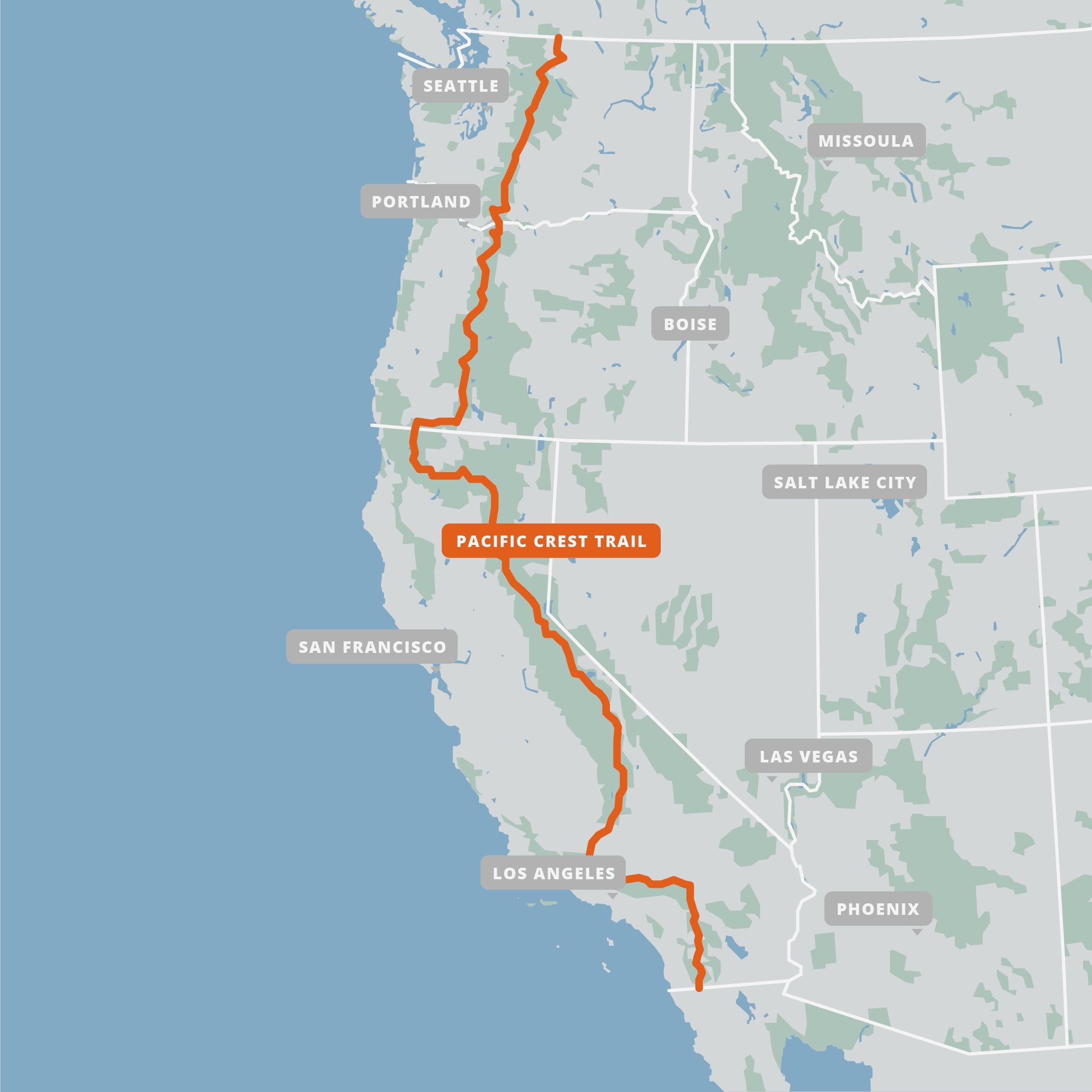
The Pacific Crest Trail is one of the world’s famous long-distance trails, located in the mountain ranges of the western United States — a range jokingly called “America’s Dragon Vein”… Trail information is very easy to find and extremely well-documented. The author also relied on trail guidebooks for preparation and handling unexpected situations. The trail stretches 4,000 kilometers, spanning the contiguous United States from the Canadian border to the Mexican border, passing through Washington, Oregon, and California. It is one of the National Scenic Trails.
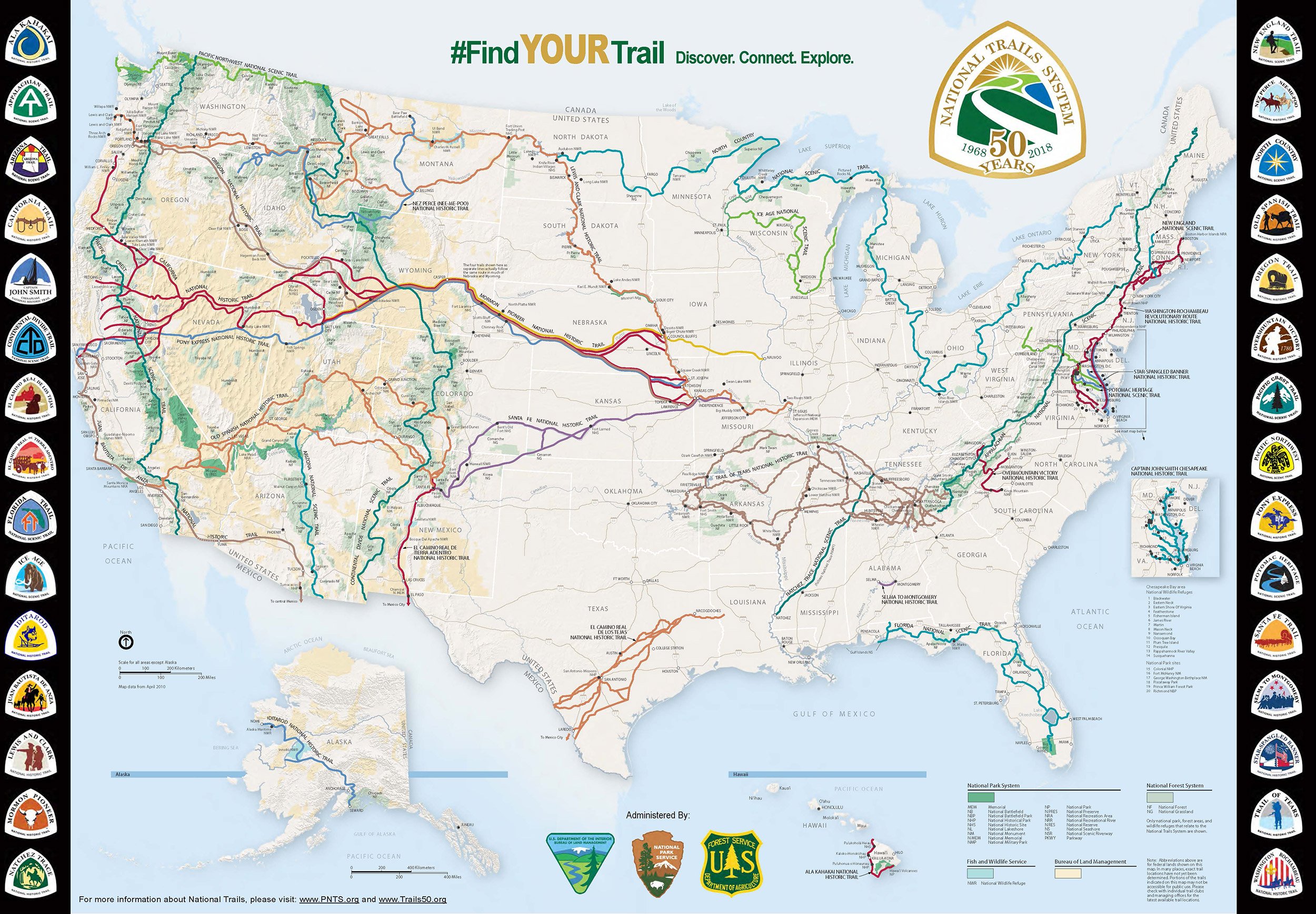
I have essentially zero contact with hiking — my concept of it is still nil — so I can only be an armchair traveler envying these backpackers. After a bit of searching on outdoor hiking, I found there’s a tremendous amount to learn. Outdoor hiking not only offers spectacular scenery but apparently even has therapeutic functions — I easily found hiking psychotherapy associations just by searching. Let me quote a passage from the original about the spiritual world on the trail:
Now, I was wholly immersed in this world, living in a completely new way. Living so rootlessly, without even a roof over my head for shelter from wind and rain, made the world both much larger and much smaller.
Moments of Brilliance#
While reading this book, I kept thinking of Educated: A Memoir. Both are memoirs describing a period of the authors’ pasts. Not only are their writing styles similar, but their upbringings are too — growing up in isolated mountains, having an abusive father, a backward family life, and unexpectedly being extremely good at studying and getting into a top university.
More importantly, their writing style easily captures the reader’s emotions without ever feeling boring or stifling. I haven’t managed to fully summarize how they write, but one thing I paid special attention to: the accumulation of emotion followed by the unexpected move.
For example: when the author scatters her mother’s ashes into the earth, she keeps a few larger fragments of bone, unable to let go. Finally, she puts these unburned bone fragments into her mouth and swallows them.
I was stunned reading this. Throughout the book, she describes her feelings for her mother in many places. Her mother’s death affected her profoundly. After flatly (or perhaps despairingly) describing her mother’s death and cremation, unable to let go, she chooses to swallow her mother’s bones into her stomach — so she can become one with her mother! What kind of emotion could drive such an act — one that most people would find impossible to accept — as a vessel for such heavy feeling? This swallowing motion conveys far more powerfully than endlessly repeated expressions of longing ever could, and it grabs the reader’s attention far more effectively.
There’s also a passage about condoms. An older backpacker, seeing how much stuff she’s carrying, helps her sort through her pack, throwing out things that are completely useless. The old backpacker finds a big packet of condoms: “Are you sure you need these?” Having gained some trail experience, she knows the stuff is utterly useless — but as she throws out the big pack, she secretly keeps one~ Then, the next morning when she wakes up, that one condom is gone…
These plot points are so dramatized I almost suspected they were fabricated. But I carefully read the author’s preface — she says she merely omitted certain scenes and guarantees that the events are all true.
Regardless, a touch of plot that slightly exceeds realistic logic is essential in writing — it grabs the reader’s heart. The authenticity of these “moments of brilliance” themselves isn’t important; what matters is having that touch. Let me give an example from one of my favorite films, Memories of Murder, which I’m sure many have seen. Years later, the old detective returns to the crime scene and meets a child. The child says someone else was just here, crouching and staring at this drainage ditch just like you. The old detective immediately realizes this person could be the murderer. He asks the child what the person looked like. The child says: “Just… ordinary.” This moment is a stroke of genius. Many viewers obsess over who the killer actually is, but it doesn’t matter who it is. “The murderer is ordinary” — that’s what the film is trying to say.
Final Thoughts#
What could have been a boring story was written into a captivating work, with genuine depth, rich and authentic emotion. It’s a memoir of following the author back to nature and rediscovering the self — absolutely worth reading!
Recently, good books have been streaming in nonstop; my bookshelf is quite packed. But I’m not worried about them gathering dust at all, because I believe the quality of these books matches this one — reaching that “can’t-put-it-down” level, requiring no self-discipline to become completely immersed. Let me quote from a hiking expert’s blog:
> What was your favorite stretch of scenery? > The next one.