
Why Write About Two Books Together?#
Normally I’d write separate pieces after finishing these two books, but I figured neither would yield all that much content. Although I’ve read a few English originals (and written about them), I clearly underestimated the difficulty of When Breath Becomes Air. It’s packed with unfamiliar vocabulary — loads of medical terms I’d never encountered. I basically forced my way through it with half-understanding. As for What Life Should Mean to You… it doesn’t feel as miraculous as people say. After all, it’s a century old — I didn’t extract much nourishment from it (a little, though). To avoid the awkwardness of too-thin content, I’m lumping them together.
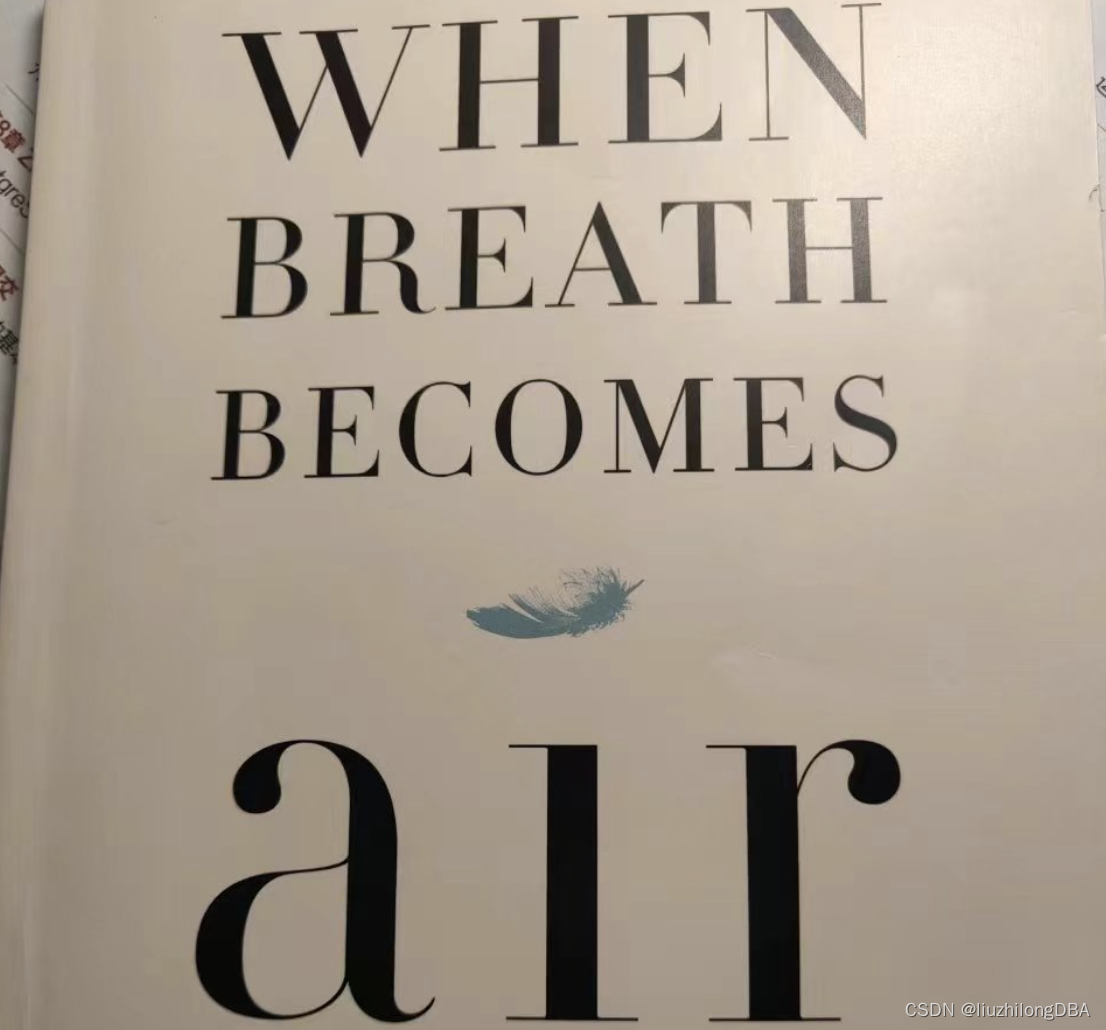
When Breath Becomes Air#
The author was a surgeon with extraordinary achievements in medicine. At the peak of his career, he learned he had terminal cancer. Less than two years after the diagnosis, he passed away. This book was written during those two years. It describes, from a first-person perspective, how one confronts such misfortune as cancer and reflects on life and its meaning in one’s final days.
When he learned he had terminal cancer, as a top surgeon he knew exactly what it meant. He knew he didn’t have long to live. At first, he was even angry — why did such a low-probability event happen to me? Why me? Something like this is hard for anyone to accept. But only the truly ill live day by day with the pain, quietly walking toward that inevitable but unscheduled death.
After his diagnosis, he and his wife decided to have a child immediately — before chemotherapy began. The author also managed to spend a few months with his baby daughter before passing. He wanted to watch his precious daughter grow up, to know what she’d be like when she was older — though he was certain he’d never know. It seems almost too cruel.
Near the end of the book (about twenty or thirty pages from the finish), the author’s prose abruptly stops. What follows is a chapter written by his wife, opening with: “Paul has left us…” Even knowing how it would end, I couldn’t accept it — death came so suddenly that he couldn’t even finish his book… But thinking about it from the book’s intended meaning, this incompleteness is, in a way, a kind of completion…
How should we view death? If I were to die before forty, what would I do? I’d certainly be unwilling — there are too many things I haven’t finished. The author ultimately saw through the meaning of life; he believed the most important thing is to experience life and live in the present moment. I seem to be different — I live in the future, never now! If I go die right now, I’d leave this world accompanied by anger and resentment.
(His experience inevitably reminds me of the Japanese drama The White Tower — an absolutely brilliant show! Professor Zaizen, at the peak of his career, gets cancer and ultimately donates his body for cancer pathology research…)

What Life Should Mean to You (Beyond Inferiority)#
A famous work in psychology by Alfred Adler, founder of individual psychology. Long ago, I watched an episode of Lao Gao and Xiao Mo about Adler and individual psychology — they made it sound almost miraculous. I couldn’t resist reading it, and figured I might even analyze myself a bit.
The most important idea in individual psychology is: how we perceive traumatic experiences is the essence of psychological problems — not the experiences themselves causing them. But this doesn’t deny the influence of the “past” on people’s behavior.
However, I personally found the book somewhat boring… “a bit too humanities-oriented.” The essential differences between short chapters aren’t that significant — it’s just discussing individual psychology through different topics. I genuinely couldn’t extract substantial nourishment from it. Maybe because it was written a hundred years ago, or maybe I’m just not cut out for this.
Adler also proposed: a group (or a couple) should think and act for the benefit of the collective, or else problems of separation will arise. If one person harbors self-serving thoughts, the group is bound to be unstable. I couldn’t agree more. I could write some self-analysis here, but I don’t want to expose myself — which is also why I felt this book note wouldn’t be very substantial.
Before reading this book, I also sampled The Courage to Be Disliked and How to Win Friends and Influence People. Since both had higher ratings than the “founding father” Adler’s book, I checked them out to see what they were about — and I didn’t like either. Courage is just a dialogue between two people — the classic wise-man-and-scholar format — where you learn the book’s ideas through conversation… I gave up after a bit. Bestseller style. How to Win Friends was more tolerable — it directly lays out life advice in plain terms. I read about ten pieces of advice — somewhat valuable — but I still couldn’t finish it. Bestseller style too.
Closing#
I’d read a few English originals and clearly got a bit cocky — turns out I need to be realistic. Gauge the difficulty first before diving in. I’d been wanting to read psychology for a while. After reading it, I’ve learned I’m not cut out for it. Well, no matter what, I had to write this book note — recording my life, like Paul did.