Preface#
Many people probably know To Kill a Mockingbird. I saw its ratings were sky-high and couldn’t resist picking it up. Sure enough, the story is brilliant — never a dull moment. Its style is quite different from the books I’d read before. Personally, I think it’s perfectly suited for middle school readers (no condescension intended) — a simple, fun, and superbly written story. In truth, the message the whole book wants to convey is very clear: don’t harm innocent people. The real difficulty lies in how to build a brilliant story around such a simple idea.
Prose Style#
I think the best thing about Mockingbird is its prose. The author brings a small-town story in the American South vividly to life. Several storylines are stunningly rendered, the plot follows the timeline smoothly without feeling muddled, and it reads effortlessly and comfortably. The story plants foreshadowing from the very beginning, only unearthing the biggest reveal right at the end. The depiction of the gap between white and Black lives is also extraordinarily vivid. This book’s setting is contemporaneous with the HBO series Boardwalk Empire, which I’d watched before — that show also features Black neighborhoods, so I could easily picture the white and Black communities.
One scene where the protagonist gets beaten up left a deep impression: “I was pressed to the ground, and before my eyes was a tiny ant, laboriously hauling a breadcrumb through the grass.” I find it hard to articulate exactly what this passage means. She’s being assaulted, yet her attention is caught by an ant carrying a breadcrumb? Maybe it means nothing? But whatever the case, this description makes almost everyone mentally highlight it — it’s so visually evocative. And it feels very much like stepping out for a cigarette after being immersed in stressful work for too long… it yanks you from tense, urgent action into another quiet world, then immediately back again.
Another Prime Minister story also left a deep impression. The young protagonist asks her father: “What’s a ‘whore’?” Her father tells her a story about a Prime Minister blowing a feather: “Every day the Prime Minister sits in the House of Commons blowing a feather toward the ceiling, straining every sinew to keep it from drifting down — yet people around him keep losing their heads one after another.” Reading this, I was just as baffled as the protagonist. What on earth does any of this have to do with anything? I only figured it out after consulting Baidu. Her father meant: don’t obsess over irrelevant things. Which is to say, her father offered no explanation at all. But by the time of the rape trial, the young protagonist understood perfectly — she knew what “rape” meant. It’s hard to say whether this kind of evasive education is right or wrong.
Who Killed Bob Ewell?#
The final chapters are brilliantly rendered. While reading, I felt completely immersed in that pitch-black schoolyard night, that son-of-a-bitch Ewell (that’s how the sheriff refers to Ewell in the book — the first time I read that line, I silently cursed him too…) hunting down two innocent children… In the end, Ewell dies, but the full truth of what happened isn’t entirely clear. The narrative is told from the young protagonist’s first-person perspective, but she doesn’t see who killed Ewell.
Since I read the e-book version, I could see many readers’ annotations and comments. I found that many people completely missed the key details of the case. I was also utterly confused after my first read-through. I reread the relevant sections several times and finally pieced together the author’s intent and the full sequence of events. Let me unravel this mystery through several key questions.
1) Is Boo Radley Black or white?
This question seems absurd but is critically important. If Radley were Black, then Tom Robinson’s case would be a cautionary tale — a Black man killing a white man is enough to be executed several times over. The jury wouldn’t care about the truth; the defendant being Black would be sufficient for a guilty verdict. So the old father and old sheriff’s desire to protect Radley would be perfectly natural — putting Radley through the legal process would just be throwing away a good man’s life. This would also make the novel a work primarily about Black racism.
But Radley is white. So none of the above applies. This also brings the novel’s content more in line with its title. The author never directly states that Radley is white, but you can put it this way: if the author doesn’t specify someone is Black, then they’re white~. Of course, there are other clues: Radley ran around with Cunningham boys (white) as a kid; he lives in a white neighborhood; his skin is deathly pale… Radley is a character described from the very beginning to the very end, the most richly drawn “mockingbird” of the entire book — yet we only see his true face in the final two chapters. That’s why I felt so unsettled not knowing whether he was white…
2) The gap in the action
Here is the passage where the young protagonist is pinned down by Ewell and ultimately saved:
“He was slowly choking me, and I couldn’t move at all. Suddenly, he was yanked hard from behind and fell to the ground with a thud, nearly dragging me down with him. I thought, Jem must have gotten up.
Sometimes, human reactions are sluggish. I stood there dumbly, like a mute. The sounds of struggle slowly subsided. Someone was panting heavily. The night returned to its prior stillness.
…I slowly realized there were four people under the tree now.”
From the moment Ewell is pulled away to the moment there are four people under the tree, a struggle took place. Afterward:
- Jem (the protagonist’s older brother) lies on the ground, injured by Ewell, unconscious
- Ewell (the man who tried to kill children) lies dead with a kitchen knife in his ribs
- Radley (the man who came to save the children) leans against a tree, coughing
- The protagonist stands frozen, still in shock
The “gap” refers to: who pulled Ewell away and killed him? What exactly happened? The subsequent discussion between Atticus and the sheriff revolves around reconstructing this gap.
3) The kitchen knife
First, the knife the sheriff uses for his demonstration is a switchblade, not the kitchen knife. “Was Ewell killed with this knife?” “No, that knife is still in him. From the handle, it’s a kitchen knife.” So the sheriff did not destroy the murder weapon — that’s a fact.
In any homicide, the murder weapon is an extraordinarily critical piece of evidence. Clearly, this kitchen knife is the murder weapon. Whoever brought this kitchen knife is very likely the killer. The sheriff says, “Ewell probably found that kitchen knife somewhere in the dump… sharpened it razor-sharp… Ewell fell on his own knife.” This is the sheriff’s subjective speculation. There are many possibilities:
- Ewell brought the knife, tripped himself, and the kitchen knife stabbed into his ribs — an accidental death.
- Ewell brought the knife; Jem, despite his broken arm, wrestled it away and killed him.
- Radley brought the knife and killed Ewell.
First: the probability of Ewell bringing the knife is low. If he’d brought a knife, he could have just rushed up and stabbed them — there’d be no need to go to the trouble of twisting Jem’s arm and strangling the protagonist. Now:
- Scenario 1: Ewell was already fighting someone (though it’s never explicitly stated with whom). An accidental death at this point seems far-fetched, but it can’t be entirely ruled out — though the probability is extremely low.
- Scenario 2: Broken-arm Jem wrestles the knife away and kills Ewell. This scenario is based on the protagonist saying “it felt like Jem pulled Ewell back” — so naturally it must have been Jem fighting Ewell. The protagonist didn’t see who pulled Ewell back; she only says it “felt like” him. A thirteen-year-old boy with a freshly broken arm taking a knife from an adult and killing him — also an extremely low probability.
- Scenario 3: Radley brought the knife, yanked Ewell back to stop him from strangling the protagonist, then stabbed Ewell to death. This is the most likely scenario — and precisely the scenario that Atticus and the sheriff “deliberately” avoid mentioning during their reconstruction. One detail supports this: before Ewell burst out, both children had screamed. The neighbors probably didn’t hear — but earlier in the book, it’s mentioned that the tree at the scene is very close to Radley’s house.
4) The reconstruction
Whether viewed through the novel’s themes and atmosphere, or through specific case analysis, it’s almost certain that the person who killed Ewell was Mr. Boo Radley.
The reconstruction dialogue between Atticus and the sheriff — I reread it multiple times; it’s absolutely fascinating. It traces the entire process of reasoning through Ewell’s death and Atticus’s and the sheriff’s psychological shifts — yet throughout, the real killer is never once named.
- Atticus wants to clarify the facts; the sheriff wants to protect the child.
First, the protagonist says someone pulled Ewell away — she felt it was Jem. Based on this, Atticus deduces that Jem got up, pulled Ewell away, wrestled the knife from him, and killed him. Working from Atticus’s deduction that Jem is the killer, the sheriff wants to protect Jem and says, “Ewell fell dead on his own knife.” Atticus then says: “If we cover up the truth, that would go against everything I’ve ever taught Jem about how to be a person.” To convince Atticus, the sheriff even demonstrates the tripping scenario.
- Gradually realizing the truth.
A thirteen-year-old boy with a broken arm is unlikely to fight and kill an adult in the dark. “Unless someone is very accustomed to the dark to qualify as a witness…” — an unmistakable hint at Radley, who never leaves his house.
- The key piece of evidence — the kitchen knife.
Atticus “suddenly” asks about the knife. The knife is still in Ewell’s body. Both of them individually realize the knife is Radley’s. They need to smooth over the knife issue. The sheriff suggests maybe Ewell found it in the dump and sharpened it.
- Confirming the lie.
There are many slow-motion descriptions interwoven here. Both Atticus and the sheriff are silently checking whether this lie has any holes, whether they should accept it: Ewell’s death was an accident — he killed himself. In the end, they reach an agreement. Even the eight-year-old protagonist says, “I can understand.”
- The title drop.
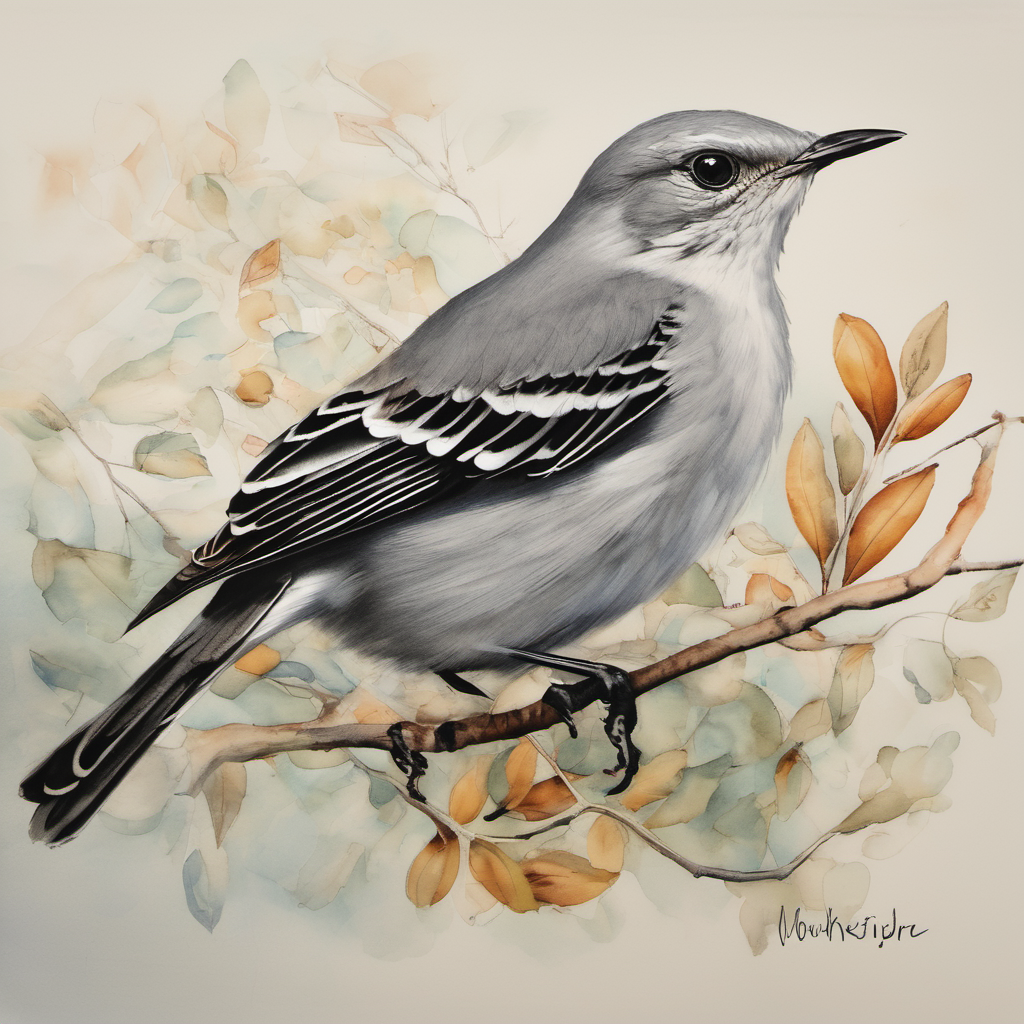
“This man has done a great service for you and for this entire town. If people ignored his reclusive habits and forced him into the spotlight — I think, that would be a crime.” This line directly hits the novel’s theme. A mockingbird symbolizes an innocent, harmless person. Dragging Radley — this mockingbird — into the spotlight is a crime. It echoes what Atticus said earlier: “Remember, it’s a sin to kill a mockingbird.”
Final Thoughts#
To Kill a Mockingbird is a relatively simple story, easy to understand — at least compared to some of the books I’ve read before. The stories of the mockingbirds in the book left a deep impression. It reminds me of the “Brother Long” self-defense case from a few years ago in China. Without Brother Long, it’s likely that killing someone in self-defense would still get you a prison sentence here. Think about America nearly a hundred years ago, when the law itself was still newly established… Think about that Black man wrongly convicted, shot dead by prison guards while trying to escape. What kind of despair must he have felt in that prison cell? He just wanted to be a decent person — and his life was suddenly cut short.
Let me close with a line from Atticus: “I think there’s just one kind of folks. Folks.”