
Preface#
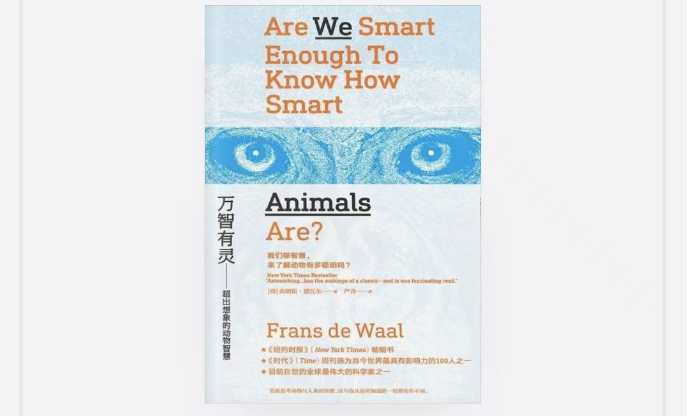
My previous book was Wild — the Pacific Crest Trail queen mentioned this book, Are We Smart Enough to Know How Smart Animals Are?, noting how she’d read it page by page, tearing each one out after reading. I wonder: as she journeyed through mountains and forests, hearing birdsong and streams, did reading this book about how clever animals are feel especially resonant?
I’d previously read Sapiens (I can’t help recommending this book — it’s incredible). That book starts from when humans first stood upright and traces our journey until we gradually became gods… What exactly makes humans different — what allows us to stand out from the myriad of living creatures?
The author, Frans de Waal, is an expert in primate behavior — the most cutting-edge and popular field within all animal behavior studies. Especially as experimental methods have improved, we’ve discovered that those traits humans keep proudly claiming as uniquely ours have all been found in other animal groups.
Apes#
This book is highly scientific, containing extensive descriptions of experiments, observations, and the development of biological science. Since it’s science, let’s learn something~ When you see the word “ape,” what kind of ape image comes to mind? Whatever it is, it’s not precise enough. Because “ape” is a general term — you can roughly divide apes into four types: chimpanzees, gorillas, orangutans, and gibbons (bonobos are likely a branch of chimpanzees, frequently mentioned in the book; I’ll set them aside for simplicity):
| Homo Sapiens | Chimpanzee | Gorilla | Orangutan | Gibbon |
|---|---|---|---|---|
| Homo Sapien | chimpanzee | gorilla | orangutan | hylobates |
 /> /> | 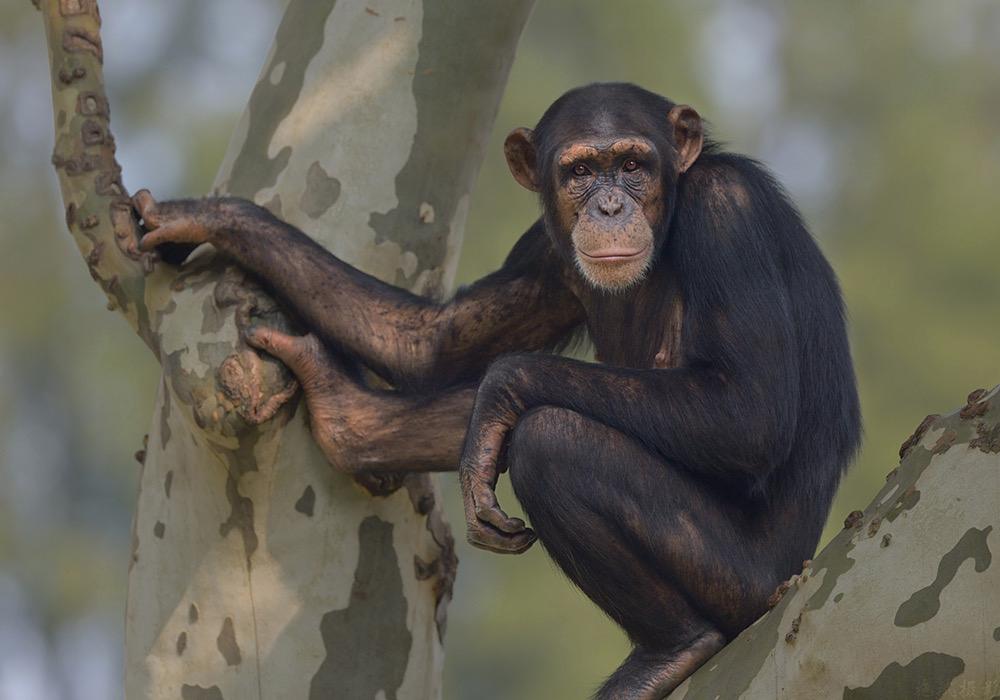 /> /> | 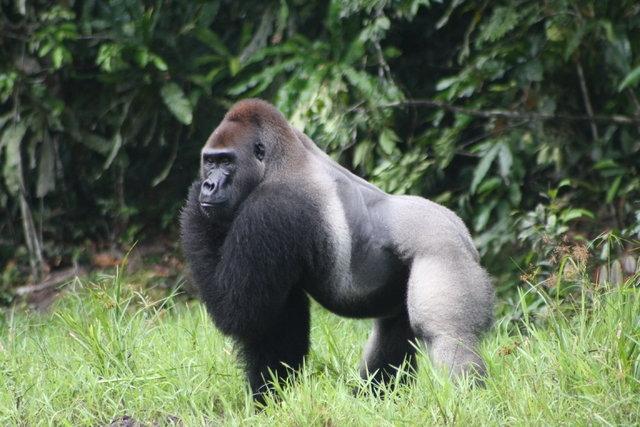 /> /> | 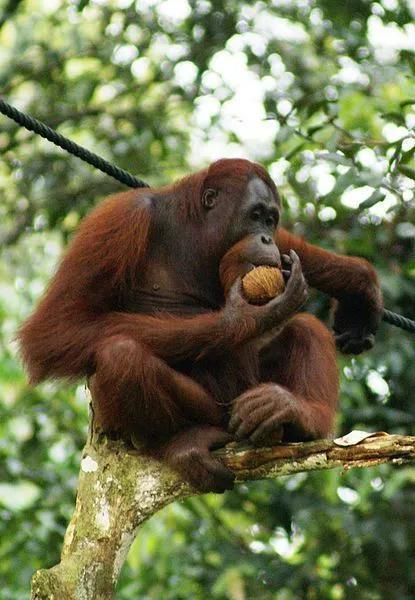 | 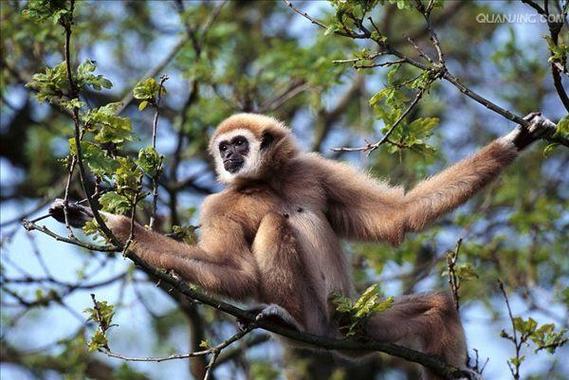 /> /> |
Kinship:
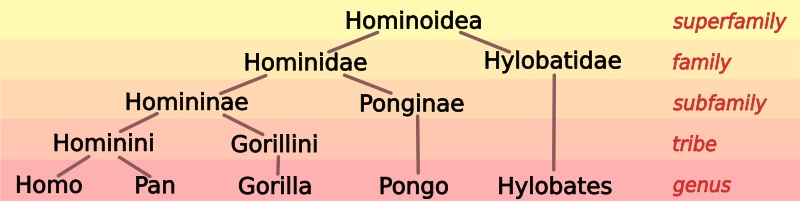 Hominoidea means the family of “hominoids” — and yes, all these close relatives of ours belong to the hominid family! The other Homixxx entries are smaller tribal branches. From the family tree above, we can see that we Homo sapiens are most closely related to chimpanzees, with gorillas, orangutans, and gibbons increasingly distant.
Evolutionary timeline:
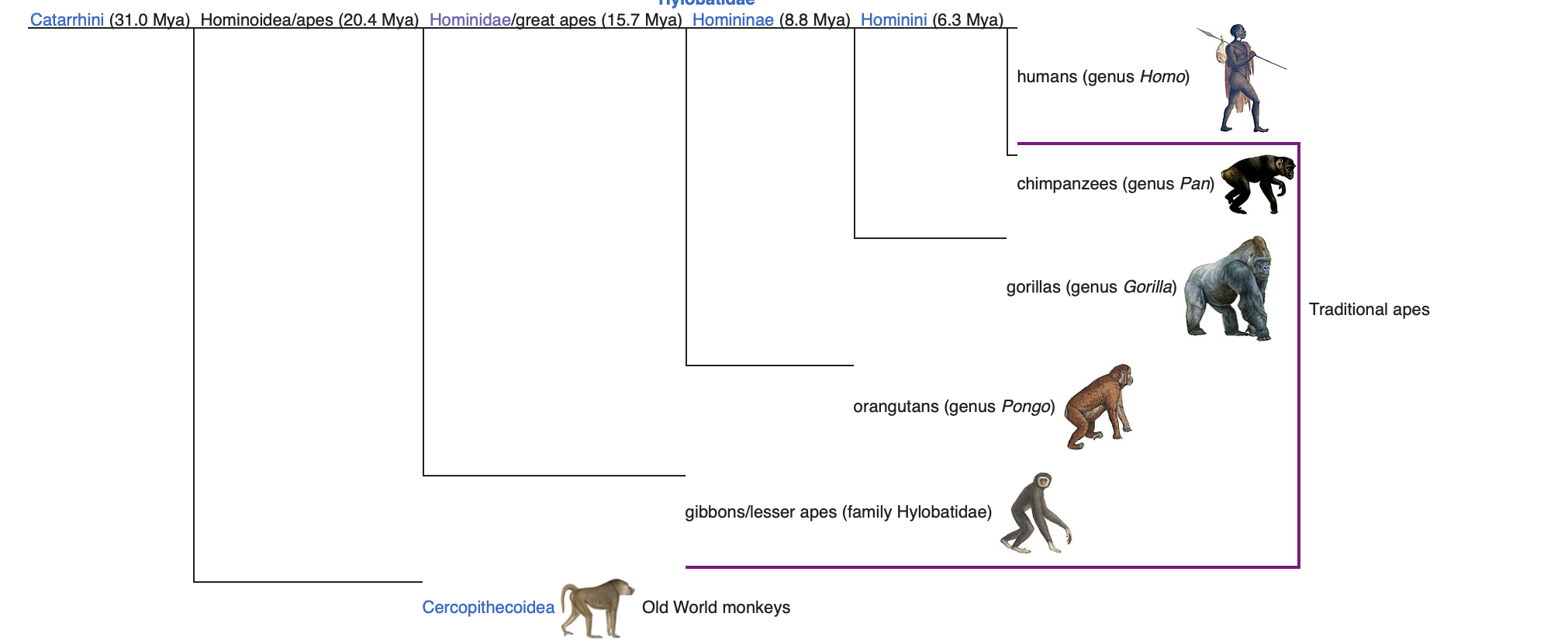
About six million years ago, we and chimpanzees were still the same species… Chimpanzees are also universally recognized as the most intelligent animals. Did we really evolve from monkeys? This description isn’t quite accurate. Although the diagram above doesn’t mark monkeys, going further back we certainly share a common ancestor. But that doesn’t mean we evolved from monkeys — just like chimpanzees, we share a common ancestor that is now extinct. So we didn’t evolve from monkeys, but we and monkeys share a common ancestor — just two different branches. “Although for convenience we often use ‘animals’ to refer to non-human species, it’s undeniable that humans are a kind of animal.”
What Makes Us Different?#
Tool use?
After reading Space Odyssey, I thought what made humans human was our learning to use tools. From the moment we grasped tools in our hands to crack open bone marrow, to humanity venturing into space to explore the unknown — all because we learned to use tools. But we can easily find similar behaviors in other animals. Chimpanzees use twigs to eat ants, and use branches as ladders to climb over walls. Even their thumbs, like ours, can grasp objects. Tool use is actually quite common in the animal kingdom. It seems tool use is not a uniquely human trait — those animals that also possess this skill haven’t developed higher civilizations.
The Cognitive Revolution?
After reading Sapiens, there was one particularly novel idea. I long and firmly believed it was correct: the Cognitive Revolution. The author argues that the Cognitive Revolution was the crucial juncture where Homo sapiens diverged dramatically from other animals. The Cognitive Revolution occurred before the Agricultural Revolution, when sapiens were still just hunters. The author gives a classic example: one person discovers a lion by the river, and returns to tell the rest of the tribe — “There’s a lion by the river.” At that moment, even though no one else has seen it with their own eyes, they all believe in their minds the concept of “there’s a lion by the river.” This transmission of belief later gave rise to religion, power, nations, currency, corporations, and other virtual concepts. Are We Smart Enough to Know How Smart Animals Are? offers a counterexample: a monkey, being bullied by two others, cornered with no escape, lets out a “snake!” cry (the call they only make when they encounter snakes). The two other monkeys stop to check whether there really is a snake — only when they confirm there isn’t one do they resume the chase. Many observations show that numerous animals possess the ability to believe through others’ stories.
Upright walking?
Upright walking freed our hands, and our brains grew increasingly developed. This is described in Sapiens. In fact, bipedal walking isn’t as special as we imagine. Bonobos on the savannah can walk on two legs for extended periods.
Language?
Language was once thought to belong to humans alone. Just because we can’t understand what animals are saying doesn’t mean they lack simple language. Animals’ various calls are not innate. When a chimpanzee grows up with one group, their calls in different situations are similar. If you place that chimpanzee in a different, unrelated chimpanzee group, researchers found their calls are completely different — and for a long time, that chimpanzee cannot integrate into the new group until it learns the new calling patterns. Some once believed language influences how we think. But to think, language is not a necessity. The ability of animals to add different numbers was once thought to depend on language, yet in an experiment, a chimpanzee successfully added numbers.
Cooperation?
The Wandering Earth 2 has this scene: a minister shows a fossilized human bone that was broken and healed — proof that this human suffered a severe injury. Among other animals, the injured would be abandoned, but this person received help from others and survived. Is cooperation the dividing line between humans and animals? Chimpanzee groups help elderly chimpanzees with limited mobility — bringing them food, feeding them water mouth-to-mouth.
Complex social relationships?
Chimpanzees not only know their own relationship with other chimpanzees, but also understand the relationships between B and C. Even when encountering an unfamiliar chimpanzee, they can assess its social status through how other chimpanzees treat it, and behave accordingly.
Thinking about the future?
Absolutely no problem at all…
Plato proposed that humans are the only featherless bipeds. Diogenes then plucked a chicken and said: “Behold — Plato’s ‘man.’” We can keep adding qualifiers to this definition until we can no longer find a description that fits only humans and no other animal. Humans and animals are certainly different — of course we can find the most fitting description of humans from many perspectives. But isn’t that a bit too subjective?
Although this book refutes various claims of difference, the author does not deny that humans are special. In some respects, we are clearly unique. But we have yet to find that distinguishing point — at least, no consensus has been reached. If we want to find the essential difference between humans and animals, we must first discard the presupposition that “humans are special.”
Closing#
First, a complaint about the Chinese translation — it screams machine translation. For example: “People believe animals are good at learning general consequences of behavior, but cannot remember any specific connection” (“People believe animals are good at learning the general consequences of behavior, but cannot remember any specific connections”). It’s very hard to understand this sentence using direct Chinese thinking — it reads exactly like a machine-translated sentence. But if you think in English, it’s instantly clear: the sentence means “People believe animals are good at learning the consequences of behaviors but do not know the connection between the behavior and the consequence” (the author is refuting this statement).
Are We Smart Enough to Know How Smart Animals Are? has a strong academic atmosphere. It uses a wealth of reliable experiments and observations to explain the essence of animal behavior. Reading this book feels a bit like reading a paper — logically rigorous and cautiously worded in its claims. Primate studies, as the frontier of animal behavior research, hold great significance for studying human behavior — though some other animals’ behaviors are also useful.
The book contains many ideas that spark sudden flashes of insight: Clever Hans, the impossibility of equal testing environments for human infants and apes, the homology of all vertebrate brains, chimpanzees’ astonishing memory and logical reasoning abilities, chimpanzee power struggles, and more. Frans de Waal’s other book Chimpanzee Politics has already been added to my reading list…